
Have You Been Optimising Customer Psychology In Your Small Business?
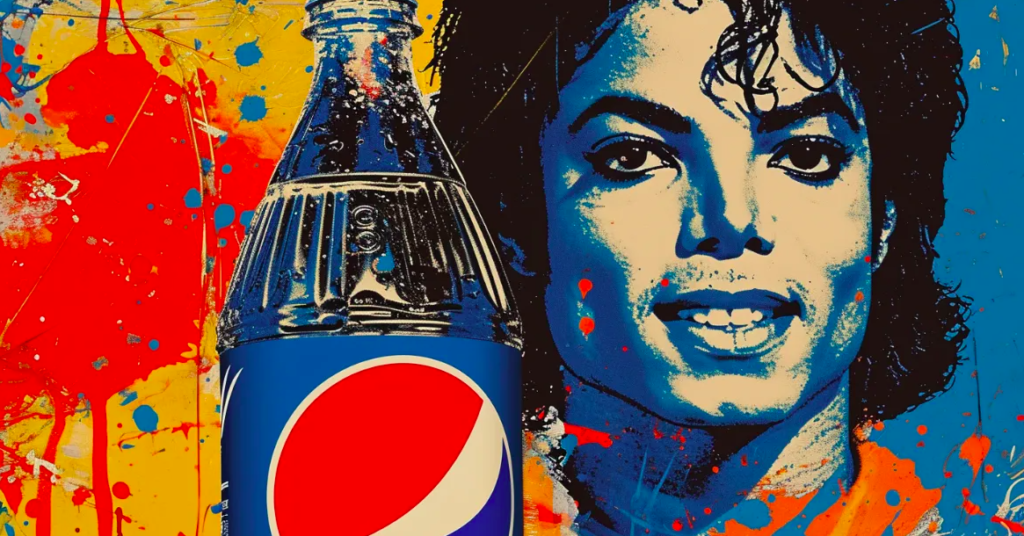
Take Coca-Cola’s lesson on customer psychology:
When Michael Jackson starred in the 1984 advert for Pepsi, moonwalking in the streets of New York, for the first time, in a long time, Coca-Cola felt vulnerable.
Pepsi’s fierce and imaginative branding campaign AND their product’s new, sweeter taste meant Pepsi was gaining market share. They were dominating the fizzy drink industry in a plot twist that saw the potential fall of Coca-Cola.
Now kings rise and fall every day in business, but Coca-Cola wasn’t going to go down without a fight. So Coca-Cola embarked on a bold venture. After a thorough and exhaustive series of market research and taste tests, the company unveiled “New Coke,” a reformulated version of the brand people knew and trusted.
There’s no way this could have backfired, right?
✅ Pepsi had changed the taste of their drink, proving it was a success.
✅ 200,000 blind taste tests proved that New Coke had the better taste.
Logically, this should have been a success.
And yet what happened afterwards is a bitter lesson in marketing and customer psychology.
When New Coke hit the shelves, consumers were outraged. Many felt that the cultural heritage had been ripped away without warning. And the emotional backlash was swift.
79 days later, the company reintroduced the original formula as “Coca-Cola Classic,” and New Coke was left to the rubbish bin of history.
Coca-Cola learned a valuable lesson in the 80s about the nuance of customer psychology.
Human beings are not the paragons of logic and reason we often pretend to be.
No, we are creatures of habit, emotion, and context. Our decisions are driven more by the stories we tell ourselves than by cold, hard facts. This is a fundamental principle of behavioural economics.
This is not a flaw though, but a feature—a beautiful, intricate feature of the human condition that, when understood and harnessed, can transform how we design products, systems, and marketing strategies.
And in this article, we’ll take a deep dive into understanding the human condition and how to optimise it for your business, so you never make the same mistake Coca-Cola made in the 1980s.
Table of Contents
The Hidden Psychology Behind Customer Choice
The classical economists would have us believe that people are logic machines, maximising utility with each choice. Yet, life’s messy and complicated. Customer psychology and behavioural economics reveal we deviate from this model all the time.
We’re swayed by emotions, social norms, cognitive biases, and a myriad of psychological factors that lead us down paths no economist could predict.
Our reality is grounded by these perceptions. And many companies, such as Starbucks, have capitalised on them.
Starbucks does not ride on the uniqueness of its flavour alone. Customers willingly pay a premium for the experience, ambience, and the brand’s association with a lifestyle they want to be in.
By recognizing this psychology, you can craft strategies that sync with actual human behaviour rather than the idealised version.
In this article, I’ll break down 15 psychological strategies that tap into this paradox of perception and reality.
By knowing these strategies, your business will be optimised for customer psychology.
14 Effective Business Strategies Based on Customer Psychology
Customer Psychology Tip 1: Premium Pricing Leverages
Price is not a number. It’s a marketing narrative. It tells the story of value, quality, and exclusivity.
Understanding customer psychology, higher prices can often enhance the perceived value of a product, making it more desirable.
It’s the reason why brands like Evian and Fiji sell at higher price points compared to regular bottled water – even though it is all just water. However, they have created a perception of purity and uniqueness compared to lower-priced alternatives.
For small business owners, this means pricing your products strategically. A higher price point, when justified by superior quality or unique features, can attract customers who equate higher cost with higher value.
A reminder for small business owners: A higher price point does not equate to better quality.
This is the problem many small businesses face when choosing expensive CRMs.
They believe these expensive choices create long-term opportunities for scaling their businesses.
Some apps and services can be designed for big businesses alone, who have big budgets to pay for “premium”.
I speak to many small businesses who don’t fall for that trap of “buy big to get big” any more.
They’re opting in for cheaper and more effective products like Slack, Canva, Zoho’s CRM software, and MailChimp, knowing these are cheaper and more effective choices.
The other side to this argument is this: If customers believe in the value of what the expensive products offer, they’re more likely to invest in it, both financially and emotionally – regardless of the price.
Customer Psychology Tip 2: Anchoring and Adjustment
Anchoring is a delightful cognitive quirk of customer psychology. It is where an initial piece of information (the “anchor”) heavily influences subsequent decisions.
Behavioural economics studies this phenomenon extensively, showing how initial anchors can shape consumer perceptions and choices.
For example, if you introduce a high-end product alongside your standard offerings, the lofty price of the premium product makes your other products seem more reasonably priced by comparison.
This tactic, known as the contrast effect, leverages the anchor to enhance the attractiveness of your main product line.
Customer Psychology Tip 3: Decoy Pricing
Decoy pricing involves introducing a third, less attractive option to nudge customers towards a preferred choice. The decoy is designed to make another option look more appealing by comparison.
Consider a scenario where you offer two services: a basic package for £50 and a premium package for £150.
To employ the decoy effect, introduce a third package—an overpriced “super-premium” package at £200 that offers marginally more than the premium package.
Suddenly, the £150 option seems like the best value, steering customers towards it.
Customer Psychology Tip 4: Charm Pricing
Charm pricing, or the art of setting prices just below a round number, is a psychological classic.
In customer psychology, Prices ending in .99 or .95 have a peculiar charm, creating an illusion of a better deal. The human brain tends to process £9.99 as significantly cheaper than £10.00, even though the difference is a mere penny.
For small business owners, especially in retail or e-commerce, this pricing strategy is a subtle yet powerful tool. It appeals to the subconscious, creating a perception of value and affordability without significantly eroding margins.
Customer Psychology Tip 5: Harnessing the Fear of Missing Out
Scarcity is a psychological juggernaut. When people believe a product is in limited supply, their desire for it skyrockets. Customer psychology shows that FOMO drives urgency and prompts quicker purchase decisions.
It’s the reason why you might see products online telling you there is only one or two items left.
These suppliers are leveraging the fear of missing out (FOMO). Because it drives urgency and prompts quicker purchase decisions.
For small businesses, creating a sense of scarcity can be a highly effective way to boost sales. It’s about making customers feel they need to act now or risk missing out on something valuable.
Customer Psychology Tip 6: Creating a Narrative
“Humans are wired to respond to stories,” I said to my childhood friend, now business partner. I had just popped open a bottle of shandy, pouring it into his glass. “They tap into the customer’s psychology, give meaning to our experiences while connecting us emotionally to the world around us. This is the essence of narrative marketing.”
For small business owners, the story you tell about your product or service dictates how it is perceived.
For instance, TOMS built its brand story around the “One for One” model, where for every pair of shoes purchased, a pair is donated to a child in need. This narrative shaped the perception of TOMS, making customers feel they are contributing to a greater cause with their purchase.
Customer Psychology Tip 7: The Journey Matters
Would you ever buy a shiny new MacBook at a car boot sale?
Customer psychology would suggest the answer is no, and the reason for this is because of the type of journey the customer wants to be taken on.
If you’re going to buy premium, you want to be taken on the premium journey. The packaging ought to be elegant, the service impeccable, and every detail designed to make you feel special.
There’s no reason why small businesses cannot take a similar approach to their own products and services.
Customer Psychology Tip 8: The Influence of Others

Did you know the best marketing strategy is not TV adverts, social media ads, leaflets through letter boxes, or email campaigns?
It’s word of mouth – another delightful quirk of customer psychology where people look to the actions and opinions of others to inform their own behaviour.
In a business context, this means that potential customers are influenced by reviews, testimonials, and the visible behaviour of existing customers.
Think about how often you check reviews before making a purchase or how a busy restaurant attracts more patrons simply because it appears popular.
Social proof can be a powerful tool in enhancing perceived value.
Customer Psychology Tip 9: Making Customers Feel Special
Exclusivity taps into our deep-seated desire for status and belonging. Customer psychology shows that when people feel they are part of an exclusive group or have access to something not widely available, the perceived value of that product or service increases exponentially.
Customer Psychology Tip 10: The Value of Honesty
Customers want to know where their products come from, how they are made, and what values a company stands for. According to customer psychology, being transparent about your business practices builds trust and enhances perceived value.
Customer Psychology Tip 11: Creating Consistent Customer Experiences
Consistency is key to a successful business. Customer psychology suggests that every touchpoint with your business should reinforce the story, value, and quality you aim to convey. This means ensuring that your branding, customer service, and product quality are all in harmony, singing the same melodious tune.
Related Article: Why Does Customer Experience Matter?
Imagine walking into a high-end store that prides itself on luxury, only to be met with disinterested staff and poorly maintained displays.
How might that make you feel?
Customer Psychology Tip 12: Create Relatability
A study by Deloitte found that Gen Z and Millennials are increasingly favouring social media platforms over traditional TV. Customer psychology can explain why:
People are shifting away from mass-produced content made by corporate giants, in favour of relatable content made by independent creators.
People want to interact and be part of the story by commenting, liking, and sharing.
In other words, customers want to connect more to things around them. They crave to escape the processed, the industrial, and the benign.
Customer Psychology Tip 13: Create Personable Interactions
Customers also want a personable experience with their businesses. Customer psychology suggests simple gestures like personalised emails, birthday discounts, or product recommendations based on past purchases can go a long way to establishing customer loyalty.
And you don’t need to throw large chunks of money into a management system to do this. We at Caldere create personal interactions all the time, and we’re using services like Trello and Zoho’s CRM software to get the job done.
Customer Psychology Tip 14: Fostering the “Third Place”
Coined by sociologist Ray Oldenburg, this concept emphasises the importance of having a neutral ground between the “First Place” i.e. your home, and the “Second Place” i.e. your place of work.
The Third Place is where people can interact, relax, and build community.
In the modern age of urban planning and digital communication, studies on customer psychology reveal that people – more than ever – crave a “Third Place”
By building a community around your brand, you can tap into this desire – either as a physical space, like a store or event, or a digital one, like a social media group or online forum.
Your Business Is Now Ready to Optimise for Customer Psychology
In this article, we’ve explored the fascinating landscape of customer psychology and how narrative marketing can enhance your business strategy.
By understanding these deep insights into our psyche, your small business can be optimised to create a compelling, resonant experience for your customers. Coupled with a cost-effective CRM software like Zoho, your small business will have all the hallmarks of a 6-figure business.
Remember, optimising for customer psychology is not about manipulation; it’s about understanding and aligning with the natural inclinations of your customers.
And the only way for you to understand the inner psychology of your customers is by understanding their likes, their dislikes, their goals, their personality, and more.
If you struggle to understand your customers, I’m giving away a free customer avatar sheet. It is a powerful framework for anchoring your business towards the needs of your customers.
If you want a free copy, comment the word “AVATAR” and I’ll send you this cheatsheet ASAP.
I’ll sign off now with this final message: keep exploring, keep innovating, and keep delighting your customers.

FAQ
What is customer psychology, and why is it important for small businesses?
Customer psychology, also known as consumer psychology, involves understanding how potential customers think, feel, and behave during the decision-making process. For small businesses, a solid customer insight strategy can lead to better customer experience, increased conversion rates, and stronger customer loyalty, all of which are crucial for business growth.
How can premium pricing influence potential buyers’ perception?
Premium pricing is more than just setting a higher original price. It’s a powerful marketing tactic that suggests higher quality and exclusivity. This pricing strategy can enhance the customer journey, increasing purchase likelihood by creating a sense of ownership and positive emotions associated with the product.
What is the anchoring effect, and how can it be used in a sales strategy?
The anchoring effect is a cognitive bias where an initial piece of information, such as the original price, heavily influences subsequent decisions. By introducing a higher-priced product alongside your standard offerings, you can make other products seem more reasonably priced, guiding potential buyers through a more strategic purchase decision-making process.
How does FOMO (Fear of Missing Out) drive purchase behaviour?
FOMO is a secret weapon in consumer psychology. When potential customers perceive a product as a limited-time offer, their sense of urgency heightens, driving a quicker purchase decision. This is particularly effective in ecommerce businesses where real-time stock levels can influence customer behaviour.
How can storytelling enhance my digital marketing strategy?
Storytelling taps into emotional connections and human behaviour, making your marketing messages more relatable. By crafting a narrative around your brand, you can influence consumer behaviour, enhance customer satisfaction, and increase positive experiences, which in turn boosts positive reviews and overall customer loyalty.
Why is consistency in marketing campaigns important for customer satisfaction?
Consistency in your marketing activities, from email campaigns to product recommendations, ensures that your target customers receive a cohesive message throughout the customer lifecycle. This consistency not only improves User Experience (UX) but also reinforces your digital marketing strategy, leading to lower bounce rates and higher conversion rates.
What role does social proof play in influencing prospective customers?
Social proof, such as customer reviews and positive reviews from fashion bloggers or fashion clients, serves as powerful social proofing tools. These elements influence the purchase intent of potential buyers by showcasing the positive experiences of others, thereby increasing the likelihood of a purchase decision.
How can I make my customers feel special and valued?
Loyalty programs and personalised marketing efforts, such as targeted email campaigns or exclusive product tags, make customers feel special and part of an exclusive group. This sense of ownership and exclusivity can significantly boost customer loyalty, enhancing their overall experience with your brand.
What is the “Third Place,” and how can it benefit my customer base?
The “Third Place” concept creates a community space, either physical or digital, where customers can interact and engage with your brand beyond the typical business-customer relationship. This can be a golden ticket for building a loyal customer base, fostering positive emotions, and reducing the impact of negative emotions or a negative review.
How can businesses optimize their product pages for better customer conversion?
Product page optimization is critical in ecommerce businesses. By using session recordings, form analytics, and insights from Google Analytics, you can understand user behavior and make data-driven decisions about products. This approach not only improves the checkout process but also reduces bounce rates and increases purchase behavior.
What strategies can help improve purchase likelihood for highly-differentiated products?
For highly-differentiated products, a combination of content marketing, Operant Conditioning techniques, and a well-crafted sales strategy can enhance customer personas and encourage decisions about products. Digital Marketing channels like email address collection and targeted email campaigns are also crucial for reaching potential buyers and improving purchase likelihood.
How can business owners use customer insight strategy to drive growth?
A well-implemented customer insight strategy involves understanding buyer behavior through tools like session recordings and social proofing. By aligning marketing materials and marketing plans with this strategy, business owners can create more effective marketing channels, improve user behavior, and ultimately drive business growth.
How can ecommerce businesses reduce negative reviews and improve customer satisfaction?
To reduce negative reviews and enhance customer satisfaction, ecommerce businesses should focus on providing a seamless checkout process, delivering consistent customer experiences, and utilizing real-time data from Google Analytics to address any potential pain points during the customer journey. This approach fosters positive experiences and encourages repeat business from loyal customers.